What Pakistan can Learn from South Korea’s Economic Development?
A Student’s Perspective on International Business, Innovation and Export.
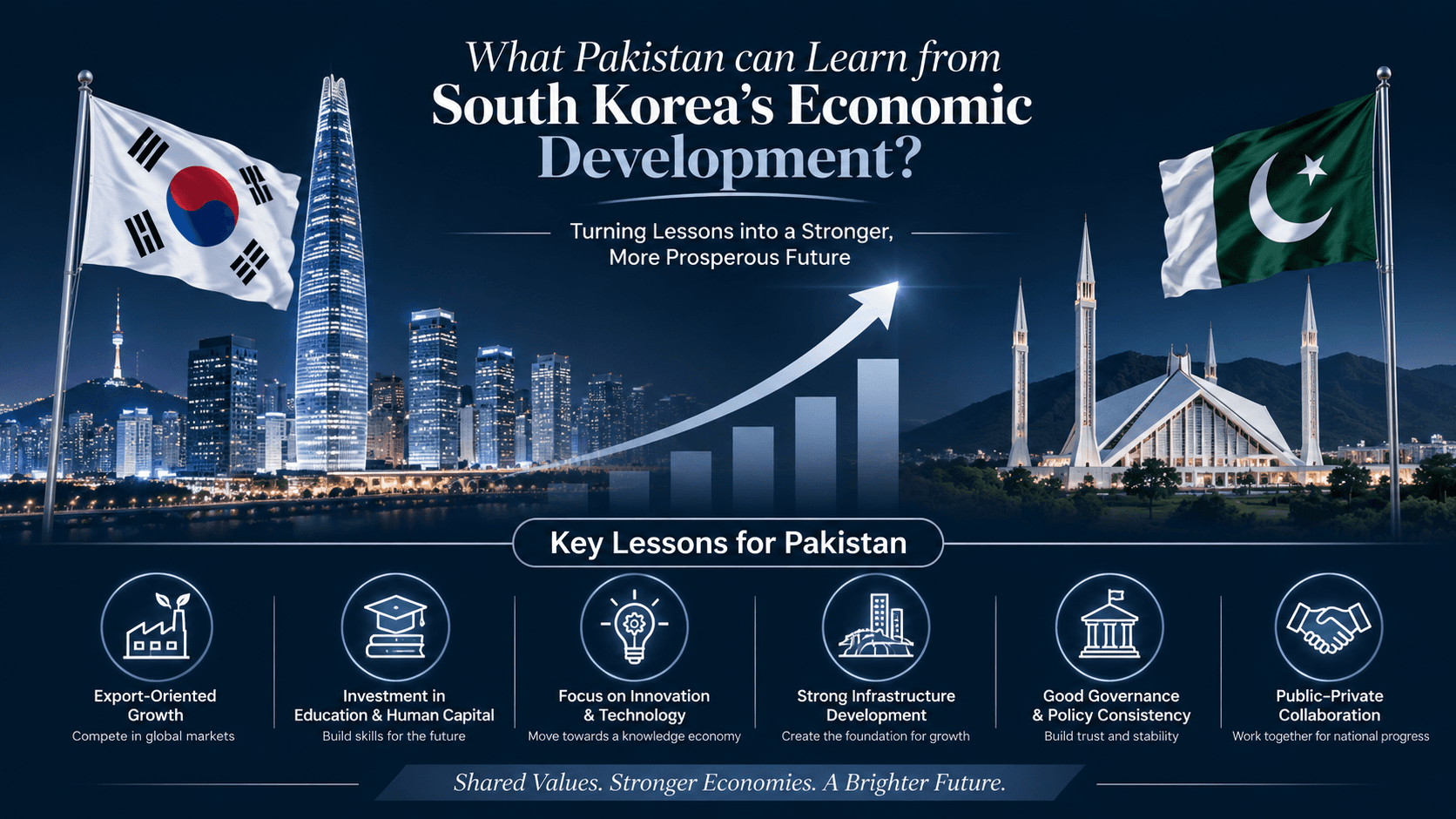
Key Lessons For Pakistan
The economic development experience of Republic of Korea offers many important lessons for Pakistan as an emerging market. Both countries have different economic conditions, structures and challenges. South Korea has developed globally competitive markets, while Pakistan still has a developing economy. Therefore, Pakistan cannot fully adopt Korea's development model. However, Pakistan can learn some important principles from South Korea's success. These include expanding exports, developing and upgrading industries, investing in education and skills development among young people and making technology an important part of economic growth. Korean economic growth did not depend on a single sector. At its core, it focused on improving different areas simultaneously.
Pakistan can learn from Korea's export-oriented growth and value addition strategies. Over time, Korea upgraded its industries and moved from producing simple products towards higher-value manufactured and technology-based products. Rather than being limited to traditional products, Pakistan can focus on value addition, export diversification and exploring new international markets. Simply Increasing export volume is not sufficient; improving product quality, strengthening branding, adopting technology and increasing international competitiveness are also crucial. In this way, Pakistani business can establish a stronger presence in global markets.
Investing in Skills and Global Competitiveness
The Republic of Korea invested heavily in education, skills development and innovation. South Korea connected workforce development with industrial and technological development, which contributed to the growth of skilled workers and productive industries. In Pakistan, education should not be limited to obtaining academic degrees. Students should also be provided with technical, digital, business and industry-related skills so that they can meet the changing requirements of the global economy. Pakistan's young population can play a more important role in economic development if the country develops a stronger connection between education and industry.
From an International Business perspective, Korea's approach of connecting foreign investment, technology and access to global markets is also significant. International Business is not only about selling products from one country to another; it also includes investment, technology transfer, skills development and knowledge sharing. Apart from attracting investment, Pakistan can benefit from Korean companies through technology transfer, management expertise and skills development. Pakistani businesses should improve their products and services to meet global standards while understanding the requirements of international markets.
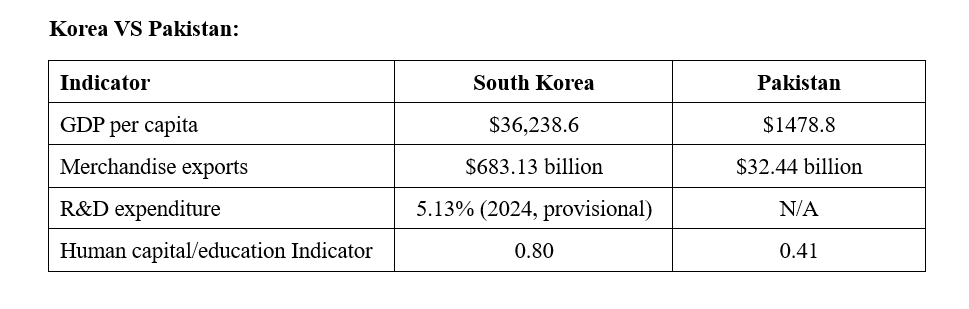
Rather than copying South Korea, Pakistan should adapt the lessons from its successful strategies to its own circumstances. Pakistan has the advantages such as a large young population, natural resources and a growing domestic market. However, better skills, innovation, competitive industries and stronger international business connections are needed to turn these advantages into sustainable economic growth. South Korea's experience shows that a developing country can transform its economy through the effective use of long-term planning, human capital, exports, innovation and international business.
- Economic Development
- Key Lessons