Korean Companies Expansion in Global Markets
From “Made in Korea” to Global Brand – How Korean Companies Entered International Markets.
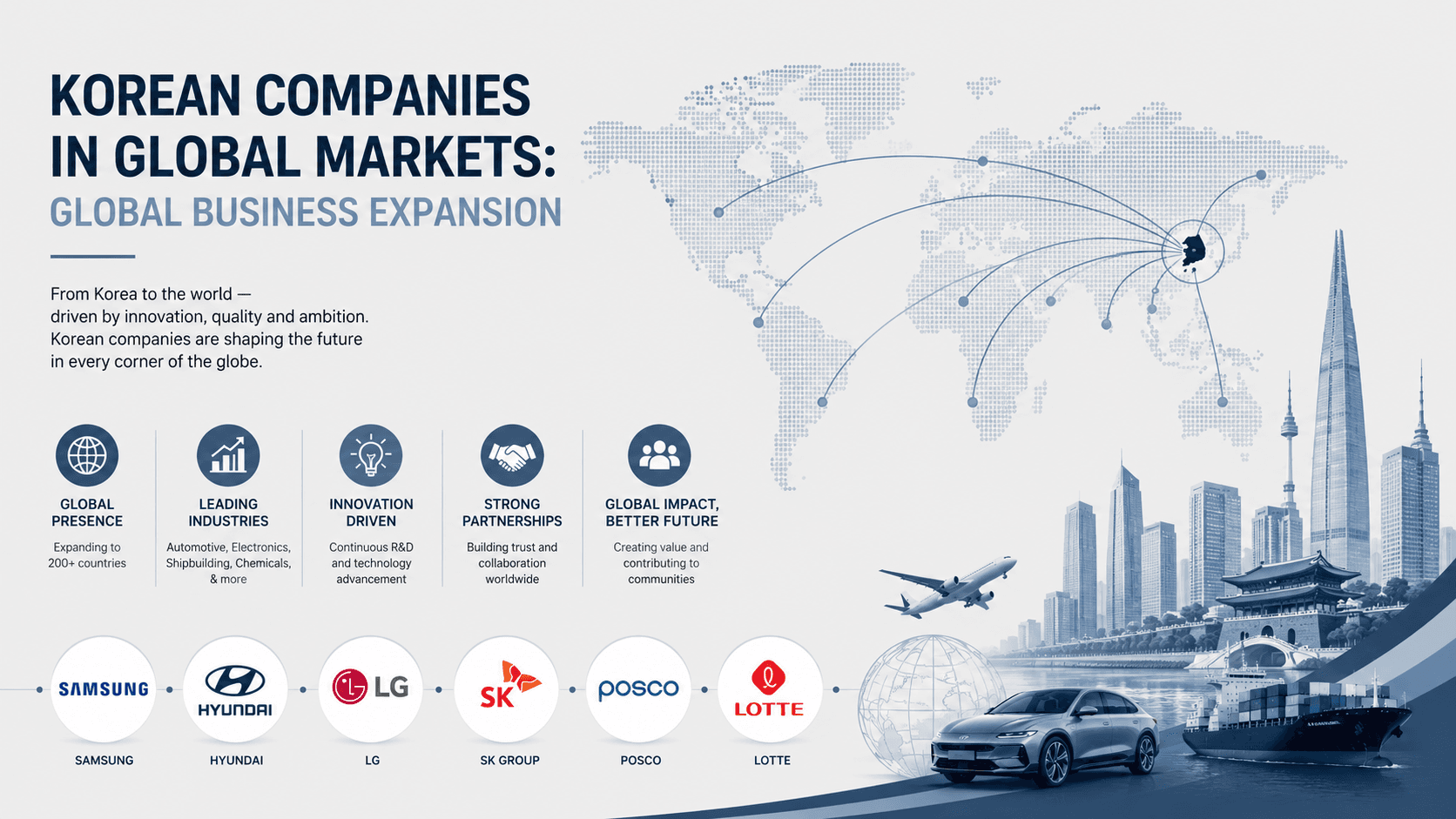
South Korea's Export Strategy
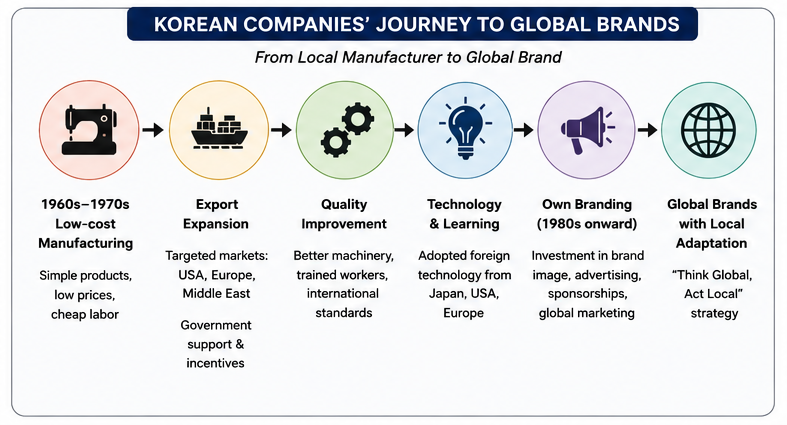
During the Korean economic development, the Korean government strongly supported companies that were interested in entering international markets. The government strongly focused on an export-oriented strategy and therefore encouraged companies, especially chaebol businesses, to expand into International Markets because higher exports could help the country earn high amount of foreign currency. Initially, the companies targeted markets in United States, Europe and the Middle East. The government supported those companies that showed interest in exporting their products, by providing low-interest loans, various incentives, relatively cheap electricity and rewards for achieving export target. The rewards were used as a tool of encouragement for the companies to trade further in foreign markets.
In the beginning, Korean companies mainly exported low-cost and simple products. For example, after Korean war in 1953, Samsung’s early export was not a Smartphone or television, the company initially exported products like food and textiles. Because these products were simple to manufacture and could benefit from Korea’s low-cost labour at that time. Korean companies made their place in foreign markets by competing on relatively low prices. Over time, when their exports increased, the companies continuously focused on improving quality of the products. They invested in better machinery, trained workers and improved their products to meet international standards. Gradually, “Made in Korea” products became more reliable. Korean companies also learned and adapted foreign technology from countries such as Japan, United states and Europe.
Building Global Brands
Korean companies adapted their products according to the trends, needs and demand of the local markets in every country. For example, In India, when demand for dual sim was high, Samsung launched dual-sim phone for Indian market. Moreover, the companies set the prices according to the local consumer need and purchasing power. The companies used different products and different pricing strategies across various markets. For Instance, In India, Pakistan and Vietnam, Samsung launched budget smartphones whereas, in Europe, America and Middle East, the company heavily focused on flagship Galaxy Models.
From 1960-1970s, some of the Korean companies were involved in manufacturing products for foreign countries and markets. No one knows if these products are manufactured in Korea. But from 1980s to onward, Korea decided to change its strategy. The country decided to build its own branding rather than manufacturing for other countries. Therefore, companies like Samsung, Hyundai and LG begin to invest heavily in global branding. The companies mainly focused on brand image, product quality, heavy advertising, global sports sponsorship and consistent global branding. The impact of this was that Korean companies were no longer just manufacturers. These efforts helped Korean companies become globally competitive brands and build customers’ trust and loyalty.
Lessons From Korea's Global Expansion
One of the strengths of Korean companies was their approach of “Think Global, Act Local”. Although their ultimate focus was worldwide recognition and increasing exports, they also paid attention to the need and demand of local customers in every country. This approach not only helped them successfully enter international markets but also made them successful global brands. The journey of Korean Companies says that low prices are not enough for long-term success. Although Korean Companies could initially compete at relatively low prices, but this strategy alone was not reliable for long term success. Alongside low prices: product quality, innovation and technology also matter. By entering international markets, companies learned about international competition, different business environments, technology, different consumer preferences. Overall, International exposure was a learning process for Korean companies as well.
- Entry Strategy
- Global Markets
- Korea